A quiet stretch of the Buffalo can look easy from the gravel bar, especially on a sunny morning near Jasper. But Buffalo River canoe safety begins well before a paddle touches the water. This is a free-flowing Ozarks river, not a controlled water park. Water levels change, storms can arrive quickly, and a relaxing family float can become stressful when a group is underprepared.
The good news is that a little planning goes a long way. With the right route, proper gear, realistic expectations, and a healthy respect for the river, canoeing the Buffalo can be one of the best ways to spend a day in northern Arkansas.
Let River Conditions Choose Your Float
The Buffalo is beautiful because it behaves like a natural river. That also means its depth, current, and difficulty can vary dramatically from one week to the next. A stretch that is shallow and leisurely in late summer may have a faster current, fewer exposed gravel bars, and more challenging obstacles after steady rain.
Check current conditions before leaving your cabin, including the forecast for the entire watershed, not just the weather where you are staying. Rain upstream can affect the river later in the day. Local outfitters and park information sources can help you understand whether your planned section is floatable, unusually fast, or simply not a good fit for your group.
Do not assume a higher river is automatically better because it means less dragging through shallow spots. More water can make the current stronger, cover hazards that are normally visible, and make it harder to stop along the bank. On the other hand, very low water may turn a long paddle into a day of getting in and out of the canoe. The right condition depends on your experience, the age of your group, and the river section you choose.
Watch the Sky, Not Just the Forecast
An Arkansas forecast can call for scattered storms and still give you a beautiful morning on the water. Treat that as useful information, not a guarantee. Pack rain protection, keep an eye on clouds, and know where you could exit the river if lightning develops.
If you hear thunder, get off the water. Avoid sheltering beneath isolated tall trees, and wait for the storm to move through before making another decision. A wet, shortened float is always preferable to being caught in a thunderstorm on an open river.
Buffalo River Canoe Safety Starts With Proper Gear
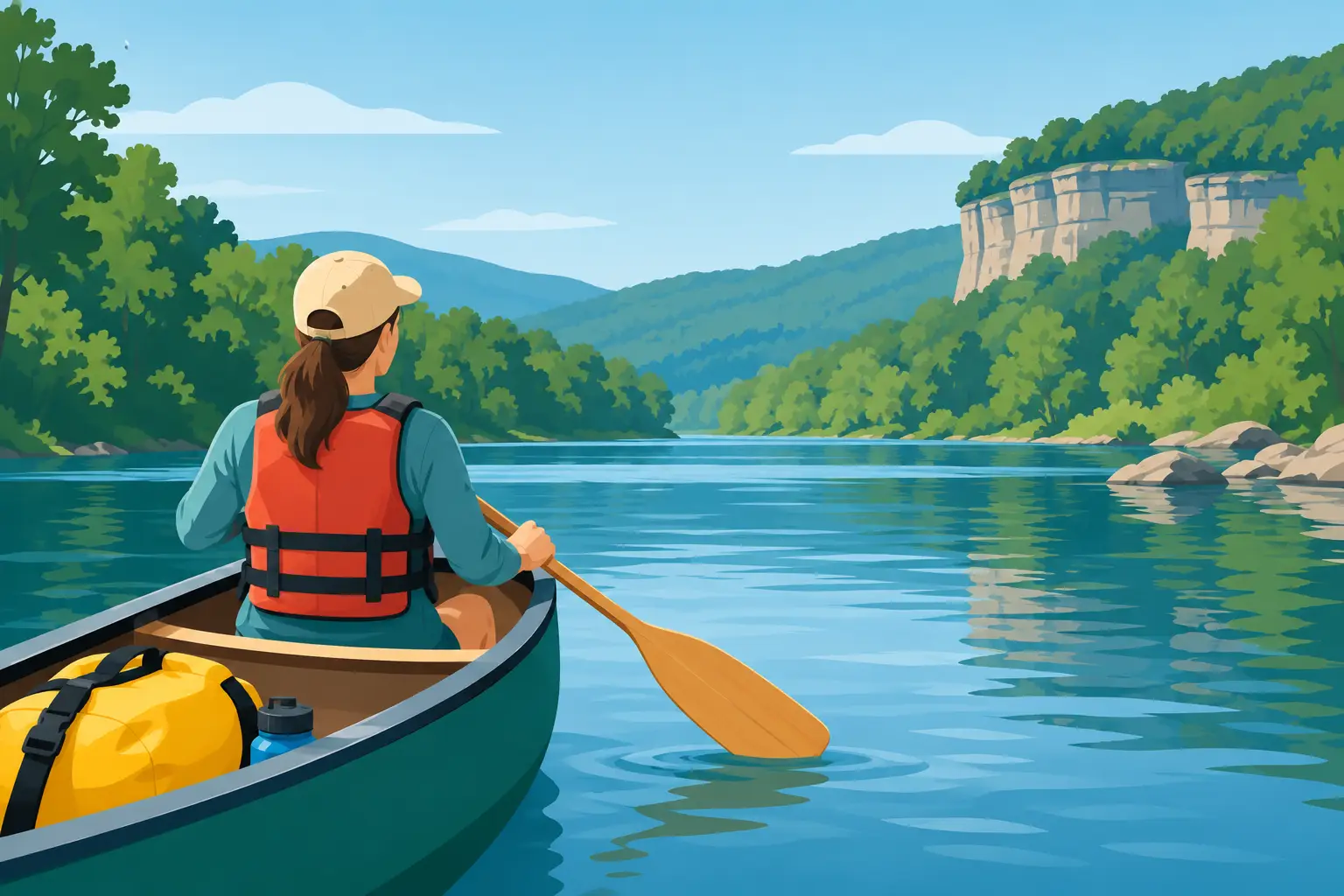
Every person in the canoe needs a properly fitted, U.S. Coast Guard-approved life jacket. Children should wear theirs at all times, and adults should too. A life jacket clipped to the seat or tucked into a dry bag cannot help in a surprise capsize.
Fit matters. Tighten the straps so the jacket stays in place if someone enters the water. For children, check that the jacket does not ride up around the ears when gently lifted at the shoulders. If it does, adjust it or use a better-fitting model.
Dress for the water temperature as well as the air temperature. Early spring and late fall floats can be chilly even on clear days. Quick-drying layers, secure water shoes, a hat, and sunscreen are usually more comfortable than cotton shirts and loose flip-flops. Closed-toe water shoes also protect feet when stepping onto rocky gravel bars.
Bring drinking water for everyone, even if the day does not feel hot. River time can be deceptively draining, particularly when you are paddling, swimming, and sitting in the sun for several hours. Pack snacks, a basic first-aid kit, sunscreen, bug spray, and any needed medications in a waterproof container.
Your phone, keys, and car shuttle details should go into a dry bag or waterproof case. It is also smart to carry a small whistle, a throw rope if someone in the group knows how to use one, and a spare paddle when traveling with multiple boats. These are simple items, but they can make a big difference when plans change.
Pick a Route That Fits the Whole Group
The Buffalo has options for different skill levels, but a scenic route is not always a beginner route. When planning, consider the least experienced paddler in your party, the youngest child, and anyone who may be uneasy in moving water. A shorter float with plenty of time for swimming and gravel-bar breaks is often more memorable than a long, exhausting push to the takeout.
Ask about the distance in river miles, likely float time at current water levels, common obstacles, and access points. Remember that float time is different from paddling time. Lunch, swimming, fishing, photo stops, and the occasional wrong turn into a slow eddy all add time.
Plan the Shuttle Before You Launch
Many Buffalo floats require a shuttle between the put-in and takeout. Confirm where vehicles will be parked, who has the keys, and how everyone will reconnect at the end of the day. Cell service can be limited in the Ozarks, so do not rely on a last-minute text message to solve a transportation mix-up.
Tell someone who is not on the river which section you are floating and when you expect to be off the water. If your group splits into more than one canoe, set simple rules before launching: stay within sight, stop at designated gravel bars, and do not let one boat race far ahead.
Paddle With the River, Not Against Each Other
A canoe works best when both paddlers communicate. The person in the stern generally helps steer, while the person in the bow provides power and watches ahead for rocks, branches, and other boats. You do not need perfect technique for a pleasant float, but you do need to avoid sudden, conflicting movements that send the canoe sideways into current.
Keep the boat pointed downstream when moving through riffles or around obstacles. Avoid broadside contact with rocks, downed trees, and bridge supports. Known as strainers, partially submerged trees and brush can let water pass through while trapping a person or boat. Give them plenty of room and never grab onto branches from a moving canoe.
Keep your weight low and centered. Do not stand in the canoe, and do not lean hard over the side to reach a cooler, fishing rod, or floating sandal. Place heavier gear low in the boat and secure it so it does not become a hazard if the canoe tips.
Alcohol and moving water are a poor combination. Save the celebratory drink for after the float, when everyone is safely back at the cabin, dry, and ready to enjoy the evening. Clear judgment matters when reading current, helping a child, or deciding whether weather is moving in.
If the Canoe Tips, Focus on People First
Capsizes happen, including to experienced paddlers. The safest response is calm and simple: stay with your boat if conditions allow, keep your life jacket on, and move toward the nearest safe shoreline or shallow gravel bar. Do not chase loose gear into swift water.
Avoid standing up in strong current, especially where you cannot see the bottom. A foot can become trapped between rocks, creating a dangerous situation. Float on your back with your feet pointed downstream until you can reach calmer water or shore, then regroup before deciding whether to continue.
Once everyone is safe, assess the situation honestly. A cold, frightened child, damaged paddle, worsening weather, or fast water is a good reason to end the trip early. There is no prize for finishing a route that no longer feels safe.
Make It a Great Family River Day
For families and multi-generational groups, comfort is part of safety. Start early enough that no one feels rushed. Give kids a job, such as spotting turtles or helping count boats at each stop, but keep an adult close whenever they are near the water. Choose swimming spots with care, and remember that even calm-looking water can have unexpected depth or current.
Set expectations before the first paddle stroke: life jackets stay on, nobody leaves the group without telling an adult, and every trash item goes back in the boat. The Buffalo is a national treasure, and leaving gravel bars cleaner than you found them helps preserve the experience for the next family.
After a thoughtful day on the river, the best ending is an unhurried one: dry clothes, a hot meal, and time to trade stories around the fire pit. At Misty Creek Lodge, that may mean soaking tired shoulders in the hot tub or listening to the creek after the kids have settled in. The river will give your group plenty to remember when you give it the preparation and respect it deserves.