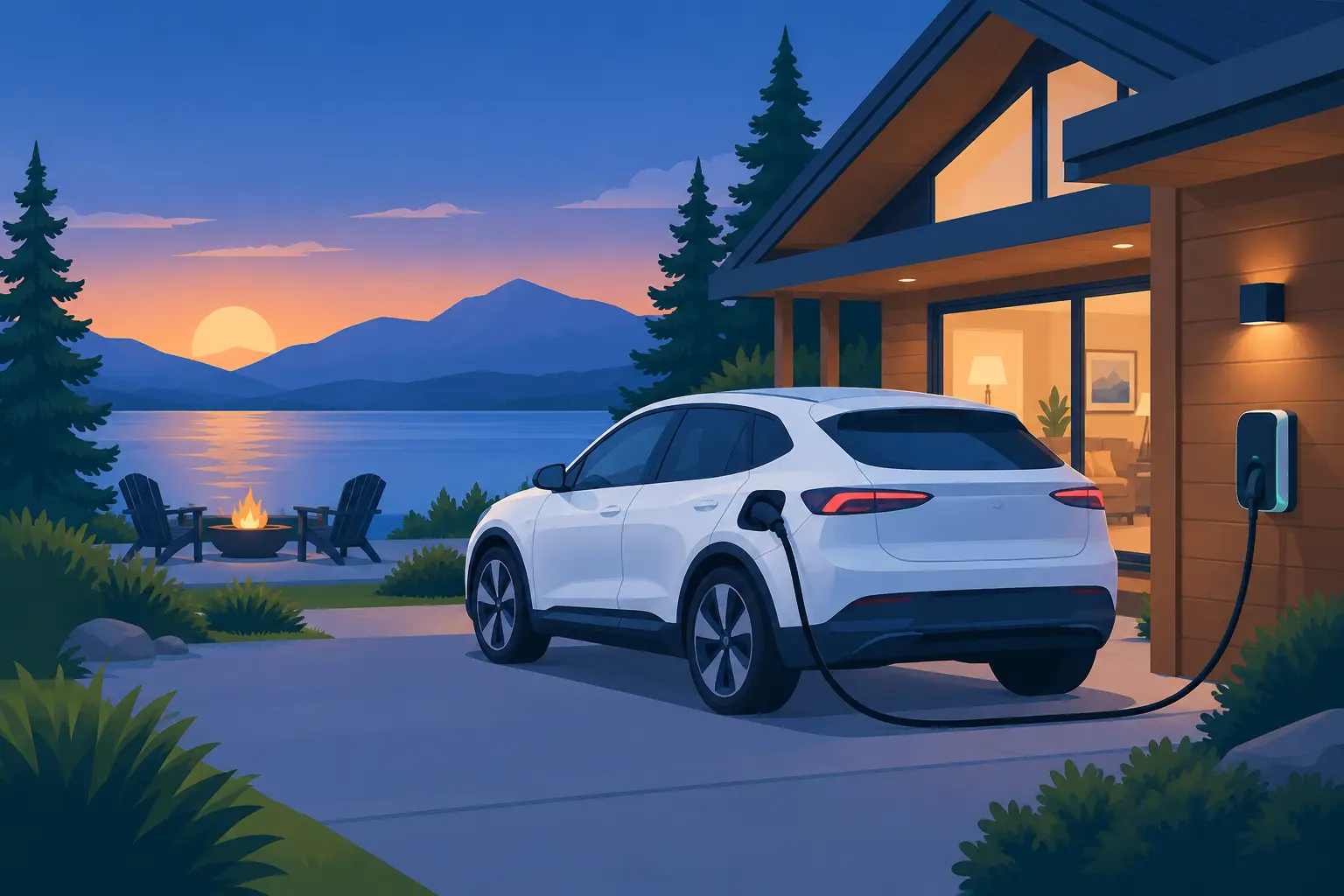
After a day of winding Ozarks roads, trailheads, river overlooks, and time on the Buffalo, the last thing most travelers want is another stop in town to find a charger. The ability to charge EV overnight at your vacation rental can make the next morning feel much simpler: wake up, load the cooler, and head toward your next adventure with a refreshed battery.
For EV owners planning a stay near Jasper, Arkansas, overnight charging is more than a nice amenity. It can shape the entire rhythm of a mountain getaway. Here is how to plan it well, what to ask before booking, and how to make charging fit naturally into a relaxing cabin stay.
Why overnight EV charging changes a road trip
Public fast chargers have their place, especially on a long travel day. But they are not always where you want them to be when you are staying near rivers, scenic byways, and rural trail systems. Charging where you sleep lets your vehicle spend its downtime doing useful work while you spend yours cooking dinner, soaking in the hot tub, gathering around a fire, or turning in early before a hike.
Level 2 charging is often the most comfortable option for an overnight stay because it can add a meaningful amount of range over several hours. The exact amount depends on your vehicle, battery level, charging equipment, and electrical setup, but a full night is often enough to cover the next day’s local driving or put a solid dent in the battery needed for the trip home.
The benefit is not only range. It is flexibility. You do not have to build every sightseeing stop around a charging station, and you can enjoy places like the Buffalo National River, nearby trails, and mountain backroads without watching the battery percentage every few minutes.
What to confirm before you book
Not every vacation rental that mentions EV charging offers the same arrangement. A little planning before your trip helps avoid surprises after dark, especially in rural areas where the nearest alternative may be a drive away.
Start by asking whether the charger is available for guest use during your stay and whether it is located at the home itself. Confirm the connector type, or ask whether you will need to bring an adapter for your vehicle. Tesla drivers, for example, may need an adapter depending on the charger installed.
It also helps to ask about parking. Is the charging space easy to access? Can you leave the vehicle plugged in overnight? Is it near covered parking, and will another guest or vehicle need that space? These details matter when traveling with a group, arriving late, or dealing with rain after a long drive.
Finally, ask whether there are any instructions for starting a session, reporting a problem, or sharing the charger if more than one EV is on the property. A good host will be glad to clarify the setup before you arrive.
Arrive with a practical battery buffer
An overnight charger is a convenience, not a reason to arrive on fumes. In the Ozarks, miles can add up quickly between overlooks, trailheads, restaurants, and river access points. Elevation changes, gravel roads, cold weather, heavy passenger loads, and gear on board can also affect efficiency.
A smart approach is to plan to arrive with enough charge to comfortably reach the rental and still have a buffer. If you are coming from a larger city or traveling after a day of sightseeing, use your vehicle’s route planner and map out charging stops before you lose reliable cell service.
This is especially helpful for groups. A cabin trip often means extra weight from luggage, fishing gear, hiking packs, groceries, coolers, and passengers. Your EV may use more energy than it does on a normal commute, so leave room in the plan for real vacation driving rather than relying on the most optimistic range estimate.
How to charge EV overnight without overthinking it
Once you have arrived, charging should be one of the easiest parts of the evening. Park in the designated space, connect the vehicle according to the property’s instructions, and verify on your vehicle display or charging app that the session has started.
Set a charge limit that matches your plans. For many EVs, a daily charge target below 100 percent is recommended for regular use, though your owner’s manual is the best guide for your model. If you have a longer drive planned the next day, such as a trip toward Branson, Eureka Springs, or another regional destination, you may decide a higher target makes sense.
Then let the car charge while you enjoy the reason you came. Make a group dinner in the kitchen, trade stories from the river, or step outside to listen to the creek. The point of overnight charging is that it works in the background instead of taking time away from the stay.
A quick evening charging check
Before settling in, take two minutes to make sure everything is set. Confirm that the plug is fully connected, the vehicle shows it is actively charging, and the cable is positioned where it will not create a tripping hazard. If your car has scheduled charging settings, make sure they are not preventing the session from beginning when you expect.
It is also worth checking again before bed if you arrived with a low battery or are unfamiliar with the equipment. That small habit can save a disappointing morning.
Rural driving calls for a little extra planning
Northern Arkansas is a wonderful place to drive, but it is not built around the dense charging network found in larger metro areas. That is part of the appeal. The roads lead to quiet overlooks, limestone bluffs, small towns, and stretches of river where the scenery is the main event.
It also means you should treat charging as part of the trip plan. Identify a few potential charging stops along your route, not just one. Download offline maps if your navigation app allows it, and keep your charging apps updated before heading into the hills. Cell coverage can vary by location, so do not depend on a last-minute search to guide the day.
Weather deserves consideration, too. Summer heat can raise energy use when the cabin is cooled for a full car, while colder temperatures can reduce range and slow charging. If rain is in the forecast, having a convenient place to plug in close to where you are staying is particularly welcome.
Share the charger with good guest etiquette
If your group brings more than one EV, talk through the plan early. One vehicle may need a larger overnight charge, while another could be fine with a few hours. Taking turns can work well when everyone agrees on the schedule rather than discovering the issue at bedtime.
Avoid unplugging someone else’s vehicle without permission, and do not use extension cords or electrical outlets that have not been approved by the host. EV charging draws significant power, so the property’s designated equipment is there for safety as well as convenience.
At Misty Creek Lodge, the EV charger pairs naturally with covered parking and the kind of stay where your vehicle can rest while your group enjoys the property. Whether the day included floating, hiking, fishing, climbing, or simply taking the scenic route, it is good to come back to a place that helps you prepare for tomorrow.
A simple EV packing checklist for cabin trips
A few small items can make a rural EV trip more relaxed:
- Your vehicle’s portable charging cable, if you have one
- Any adapter your vehicle may require
- Charging app logins and payment methods saved before departure
- Offline maps and a backup route with known charging options
- Your owner’s manual or digital quick guide for charging settings
You may not need every item, but having them together means less scrambling when you arrive. It also helps if another driver in your group needs to move or plug in the vehicle.
Let the stay set the pace
The best cabin trips leave room for unplanned moments: a longer conversation by the fire, one more round of horseshoes, a quiet coffee on the porch before the day begins. Planning to charge overnight supports that slower, more enjoyable pace.
Bring enough battery to arrive comfortably, confirm the setup before booking, and give the vehicle time to recharge while you do the same. By morning, the road can be waiting without demanding the first hour of your vacation.