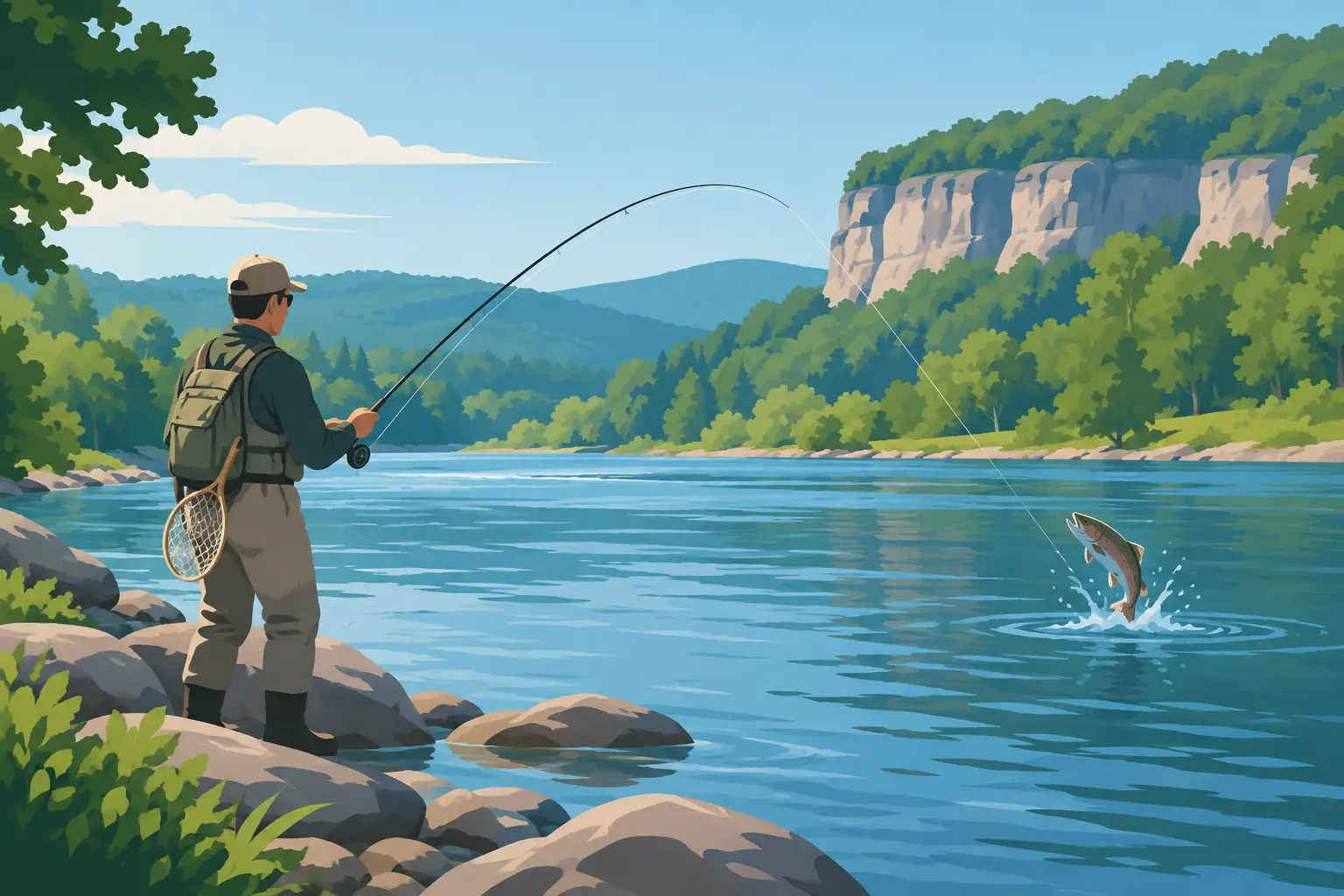
A quiet stretch of clear water, a bend shaded by bluffs, and the possibility of a smallmouth striking near a rocky seam – that is the kind of fishing day the Buffalo River can deliver. So, is Buffalo River good for fishing? Yes, especially for anglers who enjoy scenic, moving water and the satisfaction of finding fish in a wild Ozarks setting rather than standing shoulder-to-shoulder on a crowded bank.
The Buffalo is not a put-and-take fishing destination built around easy limits and paved access at every turn. It is a free-flowing river with changing water levels, rocky habitat, and long peaceful stretches where conditions matter. For families, couples, and friend groups visiting near Jasper, that is part of the appeal. A fishing trip here can be as much about slowing down, floating through beautiful country, and ending the day around a fire pit as it is about filling a stringer.
Why the Buffalo River Is Good for Fishing
The Buffalo National River supports a varied warm-water fishery, and its character changes as you travel downstream. Upper sections tend to feel smaller, rockier, and more intimate. Farther down, the river gains volume, deep pools, and broader runs. That variety gives anglers different ways to fish during the same Ozarks getaway.
Smallmouth bass are the headline species for many visitors. They thrive around rocky structure, current breaks, ledges, and deeper pools, and they fight hard for their size. Largemouth bass can also be found in slower pockets and backwaters, while spotted bass may show up in suitable habitat. Anglers also pursue goggle-eye, also called rock bass, along with sunfish, catfish, and occasional other river species.
What makes the Buffalo memorable is not simply the fish list. It is the setting. You may cast beneath limestone bluffs, hear kingfishers working the riverbank, or watch a heron lift off from a gravel bar. Even a slow bite rarely feels like a wasted day when the river itself is the destination.
It Is Best for a Certain Kind of Angler
The Buffalo River rewards anglers who enjoy reading water. A productive spot is often not obvious from the bank. Look for places where fast current softens behind a boulder, where a shallow riffle empties into a darker pool, or where fallen timber creates shade and cover.
It may be less ideal for someone expecting consistent action from a heavily stocked trout stream or a large reservoir known for trophy fish. Fishing can be excellent, but it is seasonal and weather-dependent. Water that is too high, muddy, low, or unusually cold can change the plan quickly. A flexible attitude is worth packing alongside the tackle box.
What Fish Can You Catch in the Buffalo River?
Smallmouth bass are the most sought-after game fish for good reason. They are aggressive when conditions line up, especially around current and rock. In clear water, natural presentations usually outperform oversized or overly flashy lures.
During warmer months, try small soft-plastic craws, tube baits, compact jigs, inline spinners, or topwater lures during low-light hours. A simple floating minnow-style lure worked along a current seam can also be effective. Fly anglers often do well with streamers, crayfish patterns, small poppers, and nymphs fished near structure.
Goggle-eye are a fun bonus, particularly for younger anglers or anyone happy to catch colorful, hard-pulling panfish. They often hold near rocky cover and can take small jigs, worms, or light spinners. Catfish are a good option in slower, deeper water, particularly in the evening. If your group has different experience levels, pairing a focused bass angler with someone soaking bait for catfish can make the day feel more relaxed and inclusive.
Keep Your Gear Simple and River-Friendly
A medium-light spinning outfit is a practical choice for most Buffalo River fishing. It handles smallmouth, panfish, and lighter catfish rigs without requiring a truckload of equipment. Bring a few options for shallow water and deeper pools, plus extra hooks and weights. The river has plenty of rocks, wood, and current to claim a lure or two.
Polarized sunglasses are especially useful in clear water. They help reveal submerged rocks, changes in depth, and fish holding near cover. Sturdy water shoes are just as important. Slick river rocks and uneven gravel bars can turn a casual wade into an awkward stumble if footwear is not up to the task.
When to Fish the Buffalo River Near Jasper
Spring can be a rewarding time to fish, but it comes with the greatest need for caution. Rain can raise the river quickly and make it muddy or unsafe. When water levels are stable, spring bass fishing can be very good, and the surrounding hillsides add plenty of color to the experience.
Summer is popular because fishing pairs naturally with floating, swimming, and long daylight hours. Early morning and evening are usually the most comfortable times to target bass, while midday can be better for a swim, a scenic drive, or a break back at the cabin. Low summer water can concentrate fish in deeper pools, but it can also make some stretches more difficult to float.
Fall is a favorite season for visitors who prefer cool mornings, lighter crowds, and bright Ozarks foliage. Smallmouth may feed actively as temperatures moderate, and a river outing feels especially peaceful after the peak summer rush.
Winter fishing is quieter and more specialized. Fish are still present, but slower presentations and patient expectations are essential. For guests planning a cold-weather cabin weekend, fishing can be a pleasant side adventure rather than the entire itinerary.
Bank Fishing, Wading, or Floating?
Each approach has a place on the Buffalo. Bank fishing is the simplest option for a short outing, families with children, or travelers who want to cast for an hour without committing to a full river day. Public access points and gravel bars can provide room to fish, though productive water may require a little walking.
Wading lets you reach current seams and pockets that are difficult to cover from shore. Move slowly, test every step, and never wade in water that feels stronger than you can comfortably manage. Clear water can look shallower and gentler than it really is.
Floating opens up more water and is often the best way to combine fishing with sightseeing. A canoe or kayak lets anglers work long runs, stop at promising gravel bars, and enjoy sections that feel wonderfully removed from the road. The trade-off is logistics. Water level, shuttle arrangements, weather, and the pace of your group all matter. If fishing is the priority, choose a shorter float and resist the urge to race through every good-looking pool.
A Few Local Habits Make the Day Better
Check current river conditions before setting out, especially after rain. The Buffalo can change dramatically, and a safe plan is always better than a hopeful one. Arkansas fishing licenses and current regulations apply, so confirm seasons, limits, and any location-specific rules before you fish. Regulations can change, and responsible anglers treat them as part of trip planning.
Give other anglers room, avoid disturbing nesting wildlife, and pack out every bit of line, bait container, and snack wrapper. The river stays special because visitors help care for it. If you keep fish where allowed, handle your catch thoughtfully and bring a small cooler. If you are practicing catch-and-release, keep fish in the water as much as possible and use wet hands before touching them.
Make Fishing Part of the Whole Getaway
A Buffalo River fishing trip does not need to be an all-day mission to be worthwhile. Cast at sunrise, return for a hearty breakfast, then spend the afternoon hiking, floating, or taking in the views around Jasper. Later, trade fish stories over dinner and let the evening wind down in the hot tub or around a crackling fire.
For groups staying near the river, that flexibility is a real advantage. One person can chase smallmouth while another takes photos, reads by the water, or looks for a calm swimming spot. At Misty Creek Lodge, guests can return to the comfort of a full home, clean up their gear under covered parking, and settle into an evening that feels earned.
The best Buffalo River fishing days are rarely measured only by numbers. They are remembered for the bend where a bass hit, the bluff reflected in the water, and the easy feeling of having nowhere else to be. Bring sensible gear, respect the river’s changing conditions, and leave enough room in the schedule for the kind of unplanned moments that make an Ozarks getaway stick with you.