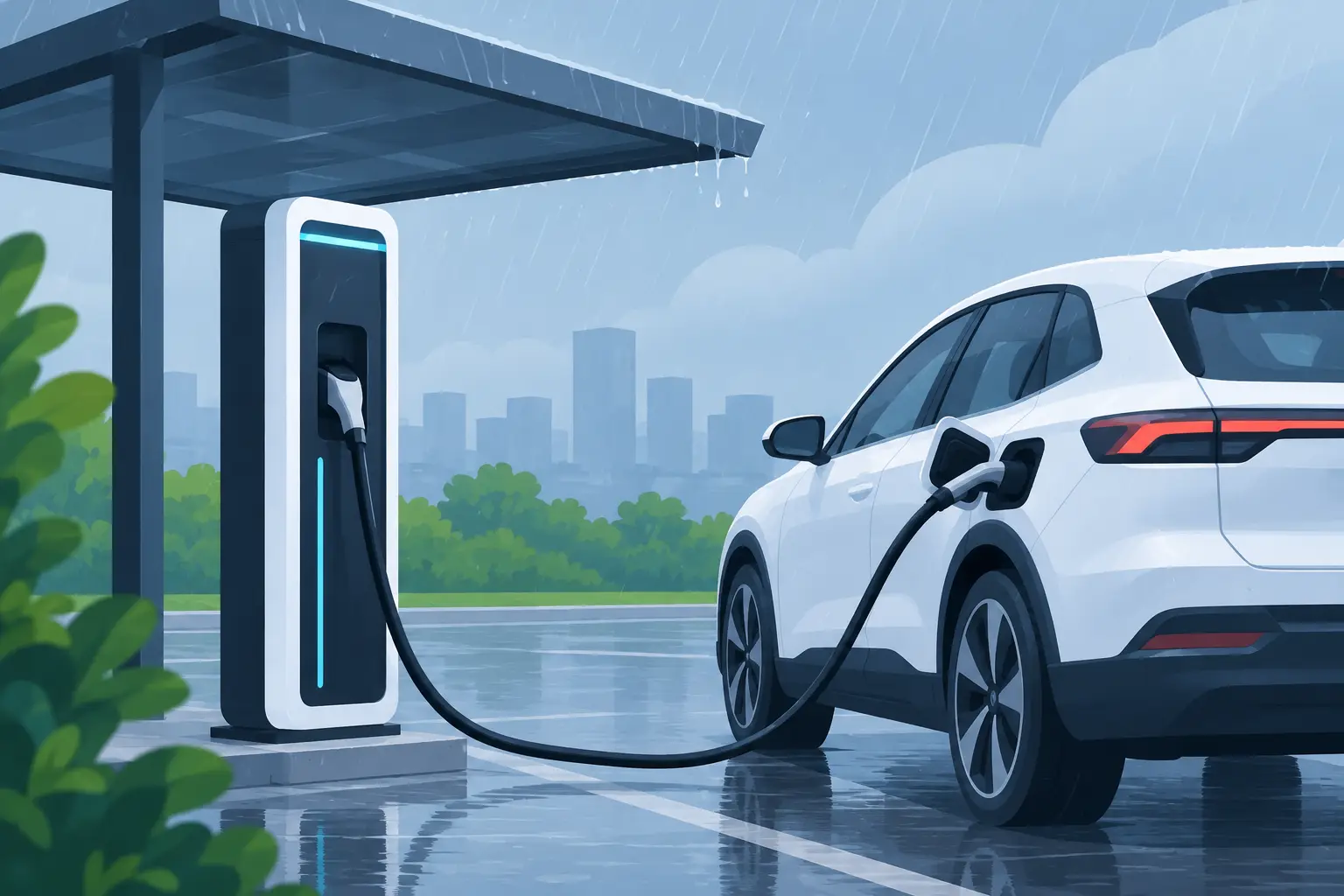
A rainy arrival should not put a stop to charging up for tomorrow’s float trip, hike, or scenic drive. So, can EV chargers handle rain? In most cases, yes. EV charging equipment is designed for outdoor use, and a properly installed, undamaged charger can be used in ordinary rain. The key is knowing the difference between normal wet-weather charging and conditions that call for a little more caution.
For travelers exploring the Ozarks, that matters. A blue-sky afternoon can turn into a downpour before dinner, especially around the hills and creeks near Jasper and the Buffalo River. Fortunately, charging an EV does not have to mean waiting for perfectly dry weather.
Can EV Chargers Handle Rain Safely?
Most modern EV chargers, also called EVSEs, are built with weather exposure in mind. The wall-mounted unit, cable, connector, and vehicle charge port use sealed components and safety controls intended to keep water away from energized electrical contacts.
The connector does not send full power simply because it is near the vehicle. It communicates with the car first, confirms that the plug is properly connected, and then begins charging. This design helps prevent the kind of open, live electrical connection people often picture when they think about charging in rain.
That does not mean every charging situation is identical. A permanently installed Level 2 charger that is rated for outdoor use is very different from a portable charging cord left in a puddle or a damaged public station with a cracked handle. Equipment condition, installation quality, and the amount of water involved all matter.
For a typical shower, you can generally plug in, charge, and get back to enjoying your evening. If the charger, cable, and connector are in good shape, rain alone is not usually a reason to avoid charging.
Why Rain Usually Is Not a Problem
Outdoor charging equipment is tested and assigned an enclosure rating that indicates how well it resists dust and water. You may see an IP or NEMA rating in a charger’s specifications. Higher water-resistance ratings are especially useful for chargers installed outside or in partially exposed parking areas.
Your EV’s charging inlet is also designed for real-world use. Drivers charge in rain, snow, humid weather, and roadside conditions every day. When the connector is fully seated, the connection is protected, and the vehicle manages the flow of electricity.
Covered parking can make the experience more comfortable, but it is not a requirement for safe charging in light or steady rain. At Misty Creek Lodge, covered parking is a welcome convenience after a muddy trail day or a long drive through the Ozarks, while the on-site EV charger adds practical peace of mind for guests planning the next day’s adventure.
The most useful habit is simple: treat charging equipment with the same common sense you would use with any outdoor electrical device. Keep the connector clean, handle it carefully, and do not use equipment that looks damaged.
When to Wait Before Charging
Rain is one thing. Standing water, flooding, visible damage, or a severe electrical storm are another. If water is pooling around the charger, cable, outlet, or vehicle connection, wait until the area is dry and safe. Never place a charger connector or portable charging control box in standing water.
Skip charging if you notice a cracked connector, frayed cable, loose mounting hardware, exposed wiring, scorch marks, or a charger that repeatedly trips a breaker. A charger that gets unusually hot, smells burnt, or displays an error message should be taken out of service until it has been inspected.
Lightning deserves its own bit of judgment. Charging systems have protective features, and homes may have surge protection, but a major storm can still bring power interruptions and surges. If lightning is close, it is reasonable to wait until the storm passes, particularly when using a portable charger or charging at an unfamiliar location. Your vehicle’s owner’s manual and the charger’s instructions should always have the final say.
Floodwater is the clear stop sign. Do not drive through floodwater to reach a charger, and do not charge a vehicle if the charging equipment or electrical components have been submerged. Water can carry debris, hide hazards, and damage equipment in ways that are not obvious from the outside.
A Wet-Weather Charging Routine for Road Trips
A little preparation keeps rainy-day charging easy, whether you are staying at a cabin, stopping at a public station, or visiting family. Before plugging in, take a quick look at the connector and charge port. Wipe away mud, leaves, or heavy moisture with a clean, dry cloth if needed. The goal is not to make everything perfectly dry in a drizzle. It is to keep dirt and debris from interfering with a secure connection.
Plug the connector in firmly until it clicks or locks into place. Avoid forcing it. Once charging begins, make sure the cable is not stretched tightly across a driveway, pinched under a tire, or lying where someone could trip over it in the dark.
When you are done, return the connector to its holder rather than letting it rest on wet gravel, mud, or pavement. This small step protects the contacts and makes the next charge cleaner and easier.
If you carry a portable Level 1 charging cord, check its instructions before using it outdoors. The outlet must be properly grounded, protected as required, and in good condition. Do not use household extension cords as a workaround. They can overheat, create voltage drop, and turn a convenient overnight charge into a preventable safety issue.
What to Expect at Public Charging Stations
Public chargers are often exposed to the weather, so they are built for it. Still, they receive heavy use from many drivers. In rain, inspect the handle, cable, screen, and cable-management hook before starting a session. Look for obvious cracks, bent pins, exposed wires, or water collecting inside the connector handle.
If a station looks neglected or malfunctioning, choose another one if possible. A broken screen is inconvenient; a damaged cable or connector is a reason to move on. Most charging networks provide a way to report equipment issues, which helps the next traveler too.
You may notice that rain makes a charging stop feel slower, even when the charger is working normally. Often that is because drivers are more likely to stay in the car, traffic is heavier, or temperatures are lower. Cold weather can affect battery charging speed, while rain itself typically does not have a major effect on the charger or battery.
Charging at a Vacation Rental Without Worry
When booking an EV-friendly getaway, ask what type of charger is available and whether it is dedicated to guest use. A Level 2 charger is typically the most practical option for an overnight stay because it can add meaningful range while you settle in, cook dinner, enjoy the hot tub, or gather around the fire pit.
It also helps to arrive with enough charge for local exploring. Northern Arkansas is wonderfully uncrowded, but rural routes can have fewer charging stops than major highways. Charge when you have the opportunity, especially before heading out for a full day of hiking, floating, climbing, or sightseeing.
For rainy arrivals, keep your charging adapter and the vehicle’s charging instructions somewhere easy to reach rather than buried under wet gear. After a day on the river or trail, that bit of organization feels like a real luxury.
The Bottom Line for Rainy Ozarks Days
EV chargers are made to handle normal rain, and charging in wet weather is a routine part of EV ownership. Use properly installed, outdoor-rated equipment, inspect it before use, and stay clear of damaged gear, standing water, and flood conditions. Then let the rain do what it does best in the Ozarks: make the creeks sing, clear the trails for tomorrow, and give you a good excuse to settle in for a cozy evening while your vehicle charges nearby.