A calm-looking river can still be moving faster than it appears. On the Buffalo River, a little rain upstream can change a float plan, a fishing spot, or a family creek day well before the sky clears at your cabin. Learning to read river conditions gives your group a better chance of choosing the right adventure for the day – and getting back in time for the hot tub, a good meal, and a fire under the Ozark stars.
The goal is not to become a hydrologist before breakfast. It is to understand what the water is telling you, check the right information before leaving, and stay willing to change plans when conditions do not match your group’s experience level.
Start With Water Level, Not Just the Weather
A sunny forecast is welcome, but it does not tell the full story. River levels reflect rainfall across the watershed, including storms that may have passed through miles away. The Buffalo River can rise after rain falls upstream, even when your immediate area looks dry and peaceful.
Before heading out, look at the current river gauge for the stretch you plan to float or fish. Pay attention to the direction of the trend as much as the number itself. A stable or slowly falling level generally creates a different experience than water that is actively rising. Rising water can mean a stronger current, fewer places to stop, and less room for error around bends, gravel bars, and downed trees.
There is no single “good” reading for every trip. The best level depends on the river section, the kind of craft you are using, recent weather, and who is coming along. A water level that feels fun and manageable for experienced paddlers may be too fast for young children, first-time canoeists, or anyone hoping for an easy, swim-and-picnic float.
Read River Conditions by Matching Them to Your Group
The most useful question is not simply, “Can we float?” Ask, “Is this the right river day for our group?” Be honest about the least experienced person in the canoe or kayak, not the most confident one.
For families with children or mixed-age groups, a moderate, predictable river is often the sweet spot. You want enough water to move the boat along without long stretches of dragging, but not so much current that every turn feels rushed. Couples and experienced friends may be comfortable with a bit more movement, yet high water still changes the stakes. Faster water shortens reaction time and makes obstacles more consequential.
If anyone in your group is uneasy around moving water, skip the pressure to make the original plan work. A scenic drive, short hike, waterfall visit, or relaxed day at the lodge can be every bit as memorable. The Buffalo National River will still be there when conditions fit better.
Low Water Means More Work Than Danger, But It Still Matters
Low water often looks inviting because the current is gentle and gravel bars are easy to reach. The trade-off is time and effort. Canoes may scrape across shallow riffles, and you may need to get out and pull your boat through sections that are too thin to paddle.
That can be part of a laid-back Ozarks float, especially for patient groups who enjoy stopping often. But it can frustrate guests expecting a continuous paddle, and it may make a long route take far longer than planned. Wear footwear that stays on your feet in rocky water, keep children close while wading, and allow extra daylight for the trip.
High Water Calls for More Caution
When the river is high or rising, it is not just deeper. It is faster, colder after rain, and less forgiving. Familiar gravel bars can disappear, eddies may be harder to reach, and strainers – trees or branches in the current – become serious hazards.
Avoid entering floodwater or trying to paddle around barriers. Never attempt to drive through a water-covered road or low-water crossing. If an outfitter, ranger, or local authority advises against floating, take that guidance seriously. Changing plans is not a wasted vacation day. It is good judgment.
Look at the River When You Arrive
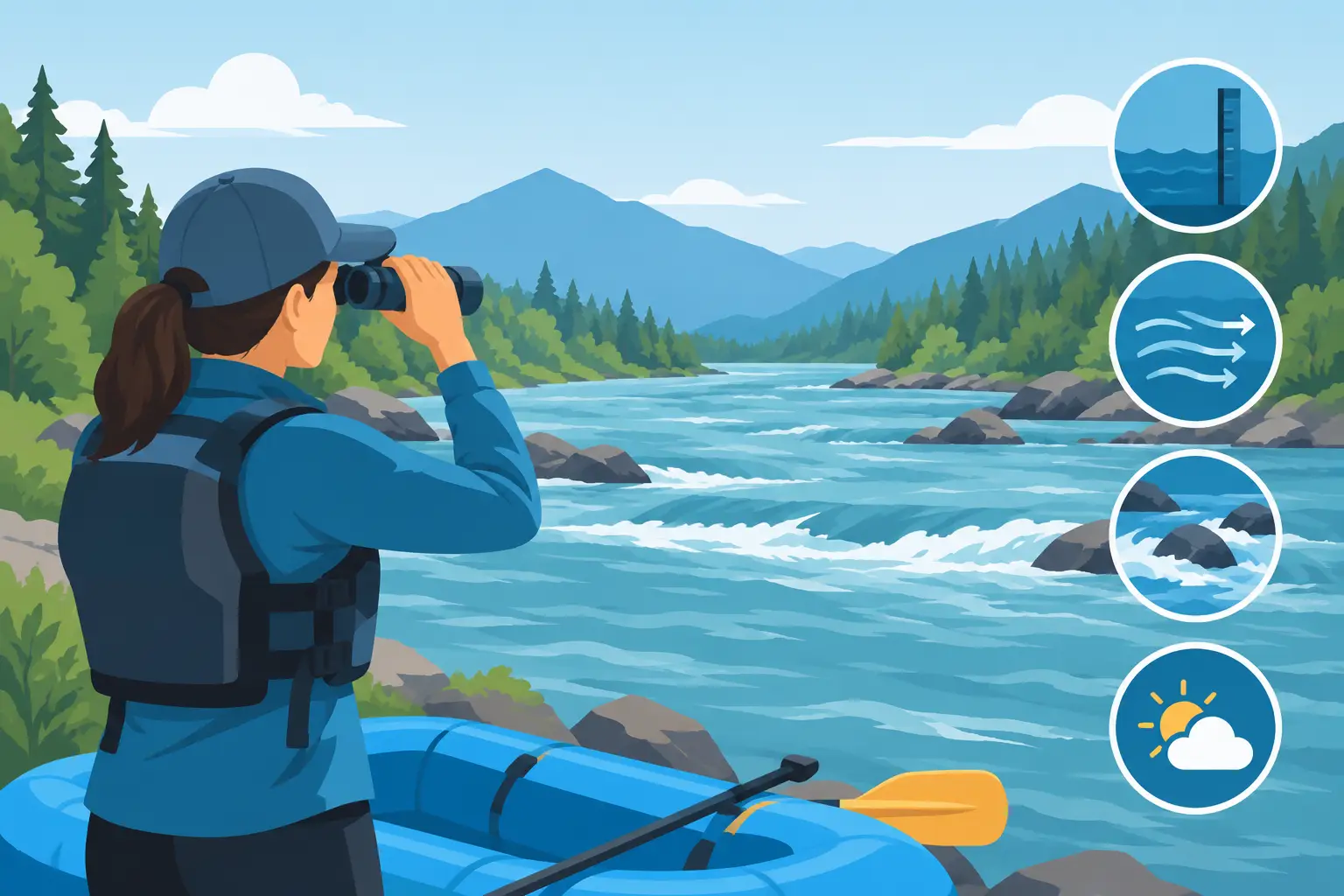
Gauge numbers provide the big picture, but your eyes provide the final check. At the put-in, pause before unloading every cooler and chair. Watch the surface for a few minutes.
Water that is brown, debris-filled, or moving quickly around bends deserves added caution. Notice whether limbs, logs, or brush are extending into the current. A harmless-looking branch can pin a canoe or kayak if the water pushes it sideways. Also look for clear places to pull over if someone needs a break. On a fast day, accessible stopping points can be fewer than expected.
Listen to the sound, too. A river with a stronger current often announces itself in the riffles. If the water is loud enough that your group would struggle to communicate, that is worth considering, especially for families paddling separate boats.
Check Rainfall Upstream and the Forecast Ahead
A single forecast check is not enough for a river outing. Look at recent rainfall, especially upstream, and check whether storms are expected during your planned float window. A storm does not have to land directly on your route to affect water conditions later.
Thunderstorms bring a separate risk. Water is not the place to be when lightning is nearby, and narrow valleys can make it harder to see weather moving in. If storms are forecast, start early if conditions allow, keep your route conservative, and have a clear plan to get off the water. Do not rely on cell service everywhere along the river.
It also helps to tell someone where you are going, which access points you expect to use, and when you plan to return. This is especially wise for groups splitting into multiple canoes, kayaks, or vehicles.
Pack for the Conditions You Actually Have
River comfort is often decided by preparation, not by expensive gear. Every person should wear a properly fitted life jacket while on the water, not leave it tucked under a seat. Bring more drinking water than you think you will need, because sun and paddling work can catch up with people quickly even on cooler days.
A dry bag for phones, keys, medication, and a basic first-aid kit keeps a small problem from becoming a trip-ending one. Choose quick-drying layers, sun protection, and shoes with secure straps or closed toes. Flip-flops have a way of disappearing in current or on muddy banks.
For longer floats, pack food that travels well and make a plan for trash before you leave. The Buffalo River is special because of its clear water, bluffs, wildlife, and quiet stretches. Leave gravel bars cleaner than you found them so the next family gets the same welcome.
Know When Fishing Conditions Are Better Than Floating Conditions
Not every river day needs a canoe. Low, clear water may make for a slower float, but it can create a peaceful day of wading, casting, and watching the current from the bank. After a rise, fishing may require more care around swift water, while changing clarity can affect where fish hold and which presentation makes sense.
Wading deserves the same respect as paddling. Use a wading staff if you have one, move sideways with small steps, and do not cross fast water just to reach the other bank. Water pressure increases quickly, and slick rocks are common. If the crossing does not feel certain, turn around.
Let the River Set the Pace
A great Ozarks getaway leaves room for flexibility. If the Buffalo is running beautifully, enjoy the float and take your time at the gravel bars. If the river is too low, too high, or simply not a fit for your group that day, choose a hike, a scenic drive, or a slow afternoon by private creek access at Misty Creek Lodge.
The best river stories are not about forcing a plan through questionable conditions. They are about noticing the water, making the smart call, and ending the day with everyone safe, comfortable, and ready to talk about tomorrow’s adventure.