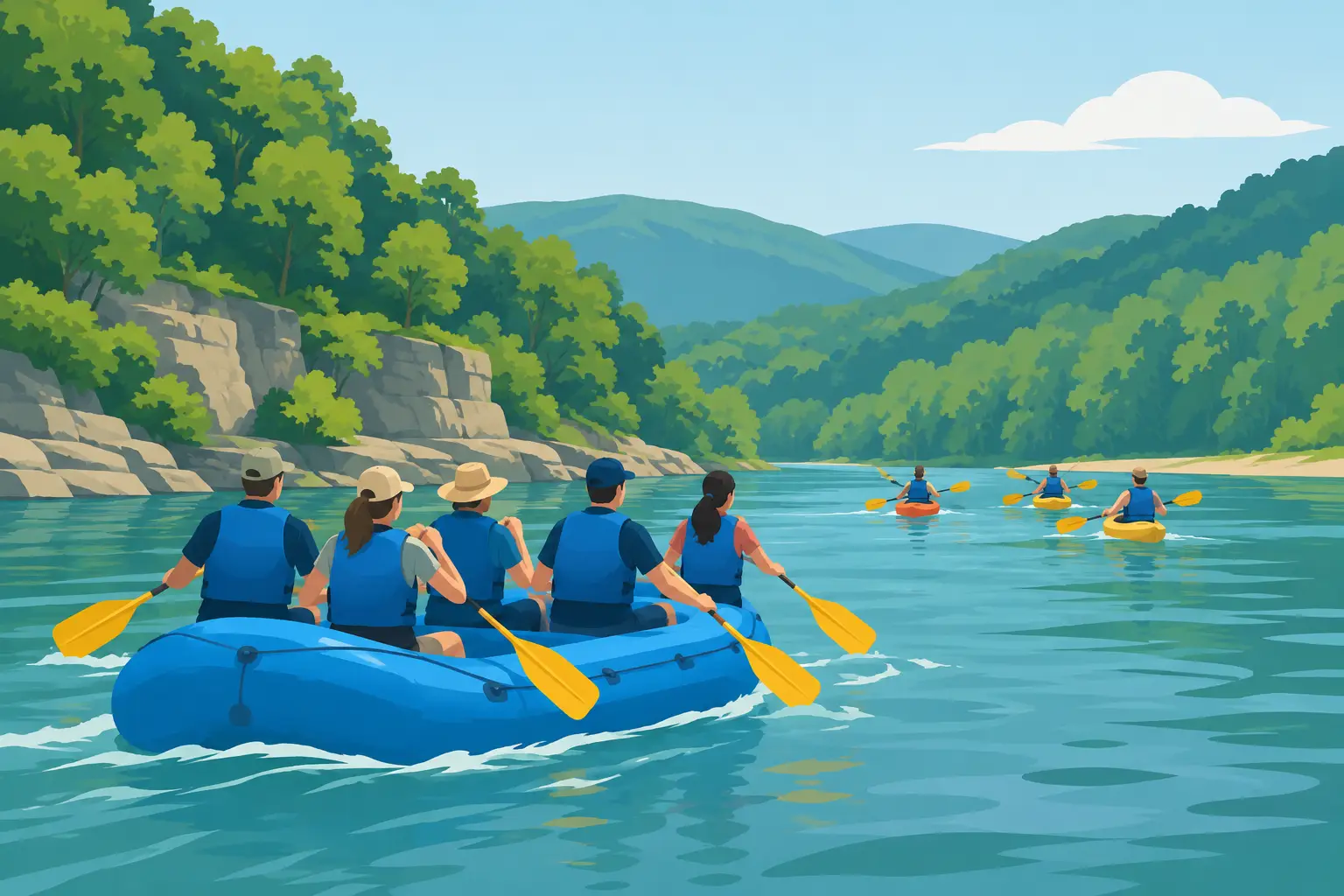
The best river trips are rarely about rushing from put-in to take-out. They are about the slow moments in between: a cool swim on a warm afternoon, a gravel-bar lunch, kids spotting herons along the bank, and the welcome sight of a hot shower and a full kitchen at the end of the day. River tourism on the Buffalo River gives families and friend groups a chance to build that kind of getaway around one of Arkansas’s most memorable natural places.
The Buffalo is a National River with a wild, unhurried character. Its clear water, limestone bluffs, wooded banks, and changing seasonal conditions reward travelers who leave room in the plan for both adventure and rest. Whether your group wants to float, fish, hike, or simply enjoy the view from shore, a little preparation helps turn a good trip into one everyone talks about on the drive home.
Why the Buffalo River Works for Group Getaways
A river destination can be difficult for groups when everyone wants something different. One person wants to paddle all day, another wants to fish at sunrise, and someone else would rather sit with a book and a view. The Buffalo River area makes room for all of it.
Float trips are the obvious draw, but they are not the only reason to stay nearby. Jasper puts guests within reach of scenic drives, mountain overlooks, hiking trails, local restaurants, and the kind of back-road exploring that feels best when there is no schedule to keep. Nearby attractions such as Steel Creek, Lost Valley, and the dramatic views around the upper river give visitors plenty of options beyond a single day on the water.
For families and multi-generational groups, the biggest advantage is variety. A successful trip does not require every guest to hike the same mileage or ride in the same canoe. It simply requires a comfortable home base where everyone can regroup, share a meal, and decide what sounds good tomorrow.
Choose Your River Tourism Season Carefully
The Buffalo River is beautiful year-round, but the experience changes significantly by season, weather, and river level. There is no single “best” time for every traveler. The right timing depends on whether your group values dependable floating conditions, warmer swimming weather, quiet trails, or fall color.
Spring brings moving water and big views
Spring is a favorite season for paddlers, especially on upper sections of the river that can become too shallow later in the year. Rainfall often improves float conditions, wildflowers begin to appear, and the hills turn bright green. It is also a season to respect the weather. Water can be cold, rain can change conditions quickly, and currents may be stronger than guests expect.
If you are planning a spring float, stay flexible. Check river levels shortly before your trip, listen to local outfitters, and have a land-based backup plan. A rainy morning does not have to ruin the weekend when hiking, scenic drives, a covered porch, and a relaxed afternoon at the cabin are all still on the table.
Summer is made for swimming and slow afternoons
Summer is when many families picture the Buffalo River: sunny skies, swimming holes, picnic coolers, and long daylight hours. Lower water can mean a more relaxed pace, although shallow stretches may require getting out to pull a canoe or kayak. For some groups, that is part of the fun. For others, especially those bringing younger children, it is a reason to choose a shorter route.
Start early when possible. Morning floats are cooler, parking is easier, and the river is often quieter before the afternoon rush. Bring more drinking water than you think you will need, use sun protection, and keep dry clothes in a waterproof bag for the ride back.
Fall favors hikers, anglers, and scenic travelers
Fall brings cooler air, colorful hillsides, and a calmer rhythm around the region. Water levels may be lower, so floating is less dependable in some areas, but the trade-off is excellent hiking weather and scenic drives that are hard to beat. Couples and friend groups who want a less crowded stay often appreciate this season.
Winter is quiet, not empty
Winter river tourism is for travelers who enjoy solitude and do not need every activity to revolve around the water. The landscape opens up, wildlife can be easier to spot, and the area feels especially peaceful after a light frost. Conditions can be cold and changeable, so this is a better season for scenic drives, short hikes, photography, and warm evenings indoors than casual paddling.
Plan the Float Around Your Group, Not the Map
A longer float is not automatically a better float. For first-time paddlers, families with children, or groups mixing experienced and inexperienced guests, a shorter route usually creates a better day. It leaves time for swimming, snacks, photos, and the occasional stop to watch the current move past the gravel bars.
Before selecting a section, consider the ages and comfort levels in your group, the expected water level, the forecast, shuttle logistics, and how much daylight you have. A local outfitter can help match the route to current conditions and arrange equipment or transportation. Their advice is particularly valuable after heavy rain or during low-water stretches.
Every paddler should wear a properly fitted personal flotation device. Keep one person’s phone protected and charged for emergencies, but do not count on reliable cell service in every river corridor. Tell someone where you are going, know your take-out point, and avoid alcohol while paddling. The river is more enjoyable when everyone can respond clearly if conditions change.
Respecting the river also means leaving it better than you found it. Pack out food wrappers and cans, keep glass out of boats and gravel bars, and give wildlife plenty of distance. A quiet bank is someone else’s favorite fishing spot, and a clean swimming hole is part of what makes the Buffalo special.
Build in Comfort After the Adventure
The difference between a tiring outdoor trip and a restorative getaway is often what happens after you leave the trailhead or riverbank. Groups need space to spread out, a place to dry gear, enough seating for dinner, and a comfortable spot to relax when the day is done.
That is why a private vacation home can make so much sense for a Buffalo River trip. Instead of dividing the group between hotel rooms or ending the evening in a parking lot, everyone can come back together. Cook a real meal in a fully equipped kitchen, trade river stories around a fire pit, soak tired shoulders in a hot tub, or let the kids keep playing while the adults enjoy the mountain view.
At Misty Creek Lodge, guests can pair access to the Jasper and Buffalo River area with room for up to 11 people, private creek access, covered parking, and thoughtful extras such as an EV charger, horseshoe pit, and a par-three golf setup. Those details matter when the trip includes different ages, different energy levels, and plenty of outdoor gear.
If your group is bringing motorcycles, ATVs, fishing equipment, or paddling supplies, think about storage and loading before you book. Covered parking and easy access can save time at the beginning and end of an active day. If you are traveling with an EV, map charging options before heading into more remote parts of the Ozarks.
Make the Most of a Rainy Day
Weather belongs in an Ozarks itinerary. A flexible group does not treat rain as a failed river day. It treats it as permission to slow down.
Use a wet morning for a scenic drive, a late breakfast, card games, or a trip into Jasper. When conditions are safe, light rain can make the hills and creek bottoms feel even more alive. When storms are possible, stay off the water and keep an eye on local forecasts. Flash flooding and fast-rising water are not situations to gamble with.
A cabin stay earns its keep on these days. There is a big difference between being stuck indoors and choosing to spend an unhurried afternoon in a comfortable place with room to cook, relax, and reconnect.
A Better Buffalo River Trip Starts With Less Rushing
The Buffalo River does not ask visitors to fill every hour. Its best moments tend to arrive when the schedule loosens: an unexpected bald eagle overhead, a longer-than-planned swim, a camp chair beside a creek, or one more round of stories after dark. Plan for the essentials, respect the conditions, and give your group enough time and comfort to enjoy where the river leads.