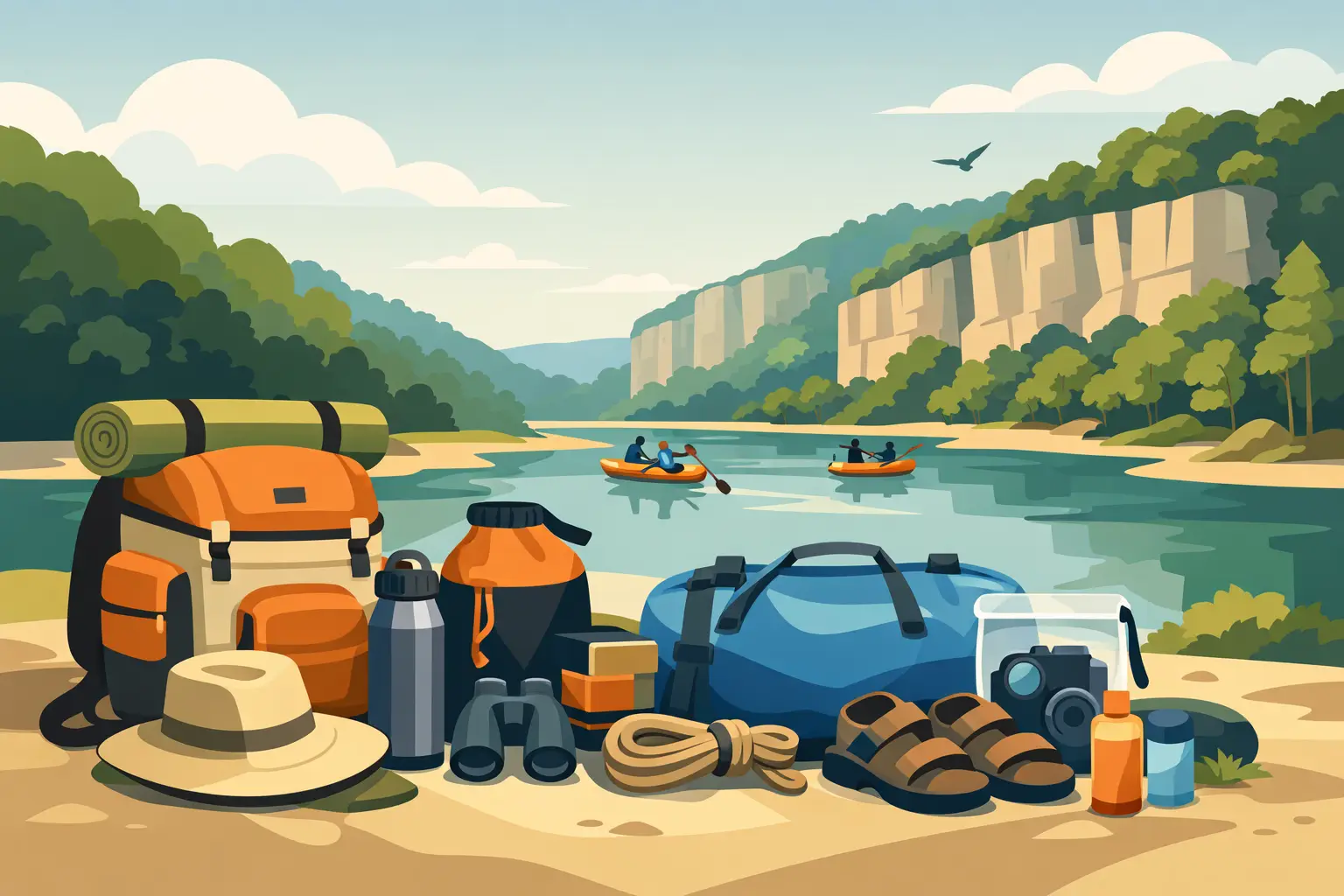
A Buffalo River float can begin in cool morning shade, turn into a sunny afternoon swim stop, and end with everyone tired, happy, and ready for a good meal. If you are figuring out how to pack buffalo float trip gear, the goal is not to bring everything you own. It is to bring the few things that keep your group dry, comfortable, fed, and free to enjoy the scenery.
The Buffalo is a wild and scenic river, which is exactly why it feels different from a day at a crowded water park. Conditions can shift with the weather, water level, season, and section of river. Pack for the trip you are actually taking, listen to your outfitter, and leave room for a little Ozarks unpredictability.
Start With the River Plan, Not the Packing Pile
Before loading the car, confirm your put-in and take-out locations, expected float time, shuttle details, and who is providing boats, paddles, life jackets, and dry containers. A short family float near Jasper calls for a different setup than an all-day canoe trip with friends. If kids are joining you, plan for more snack breaks, more sunscreen applications, and at least one extra dry layer.
Check the forecast the evening before and again on float morning. A warm forecast does not mean the water will feel warm, especially early in the season or after rain. Likewise, a blue-sky day can still include cool breezes through a shaded stretch of river. Water levels matter, too. Low water can mean more time getting in and out of the boat, while higher water deserves extra caution and close attention to your outfitter’s advice.
Keep the day simple by separating what stays in the vehicle from what goes on the river. Your cabin clothes, groceries, and hot-tub supplies can wait for later. The river bag should hold only what you would be disappointed, uncomfortable, or unsafe without.
How to Pack for a Buffalo Float Trip Without Soaking Everything
A dependable dry bag is the piece of gear that earns its keep all day. Use one large bag for towels, a change of clothes, and lunch, then use smaller waterproof pouches or zip-top bags for phones, keys, cards, medication, and car fobs. Even when a canoe feels steady, water finds its way in through paddle drips, surprise splashes, and the occasional wobbly exit at a gravel bar.
Pack important items in layers of protection. Put your phone in a waterproof case or pouch, then place it inside the dry bag when you are not using it. Bring a compact power bank if you expect to take photos, but remember that service can be limited in the hills. Tell someone your plan before you leave and do not rely on a phone as your only source of navigation or communication.
A small waterproof trash bag is equally useful. It keeps wet swimsuits away from dry clothes after the float, and it makes it easy to carry out every wrapper, bottle cap, and food scrap. The Buffalo River stays beautiful because visitors treat it like the special place it is.
Wear Clothes That Can Get Wet and Keep You Comfortable
Choose quick-drying shorts or swimwear, a lightweight shirt, and clothing you can move in easily. A long-sleeve sun shirt is often more comfortable than repeatedly applying sunscreen to shoulders and arms. Bring a hat that stays on in the wind and sunglasses with a retention strap if you would hate to lose them downstream.
Footwear is worth thinking through. Flip-flops are easy to pack but are not ideal for slippery rocks, shallow wading, or carrying a canoe along a gravel bank. Water shoes, sport sandals with secure heel straps, or old sneakers that can get wet are better choices for most float days. Closed-toe water shoes offer the most protection if your group expects to explore rocky banks or fish along the way.
Pack one full dry outfit for each person, including underwear and a light sweatshirt or long-sleeve layer. Put it in the dry bag and save it for the ride back or the evening at the cabin. After hours on the water, dry clothes can feel like a luxury.
Build a River Day Bag Around Food, Water, and Sun
The river has plenty of natural beauty, but it does not provide drinking water or lunch. Bring more water than you think you will need, especially during Arkansas summer heat. Reusable bottles are great, but choose ones that seal securely and can handle being knocked around in a boat. Freeze a few water bottles overnight to help keep food cool, then enjoy them as they melt.
For food, think portable and low-mess: sandwiches wrapped tightly, fruit that travels well, trail mix, pretzels, cheese sticks, and individually portioned snacks. A soft-sided cooler can work for a shorter float if it is secured and easy to carry. For longer trips, ask your outfitter about their cooler recommendations and whether they provide a cooler tube or storage option.
Do not forget sun protection. Bring broad-spectrum sunscreen, apply it before launch, and reapply after swimming or towel drying. Lip balm with SPF is easy to overlook until the ride home. Insect repellent may be useful in the evening or around calmer shoreline areas, though it is usually less necessary out on moving water.
The Safety Items That Deserve Space
Every person needs a properly fitted life jacket, and it needs to be worn, not tucked under a seat. This matters for confident swimmers as much as anyone else. River currents, submerged rocks, fatigue, and unexpected falls can change a situation quickly.
Add a compact first-aid kit with bandages, antiseptic wipes, blister care, any personal medications, and relief for stings or minor allergic reactions. Keep it waterproof. A whistle, a small flashlight or headlamp, and a basic rain layer are smart additions for a longer float, particularly if your schedule could run later than expected.
Leave glass containers at home. They create a hazard when broken and are not appropriate for a river day. Skip valuables you do not need, too. A simple ID, payment card, keys, and phone are usually enough.
Pack for the Group, Not Just Yourself
The best float trips have someone quietly handling the small details before they become a problem. If you are the planner, designate a shared bag for sunscreen, first aid, trash, extra water, and a backup towel. Families may also want a few familiar snacks, a small dry towel for kids, and a change of clothes that is easy to reach.
For a friend group, agree ahead of time on food, cooler space, and who is carrying shared gear. Too many loose bags make loading and unloading harder. A few well-organized dry bags are easier to manage than every person bringing a separate tote full of extras.
After a day on the Buffalo, it is especially nice to return to a place where wet shoes can come off, dinner can be made in a full kitchen, and the stories can continue around a fire. Guests at Misty Creek Lodge often find that a little organization before launch leaves more time for those unhurried Ozarks evenings afterward.
A Quick Buffalo River Packing Checklist
Use this final check before heading to your put-in:
- Properly fitted life jacket, paddle, and boat arrangements
- Dry bag with phone, keys, ID, medications, and a dry change of clothes
- Secure water shoes, sun shirt, hat, sunglasses, and sunscreen
- Plenty of drinking water, easy snacks, and a secured cooler if needed
- First-aid supplies, trash bag, towel, and weather-appropriate layer
Pack light enough that loading the boat feels easy, but thoughtfully enough that an afternoon shower, a long swim stop, or a chilly ride back does not spoil the day. The best thing you can carry onto the Buffalo River is a plan that leaves room for the river to set the pace.